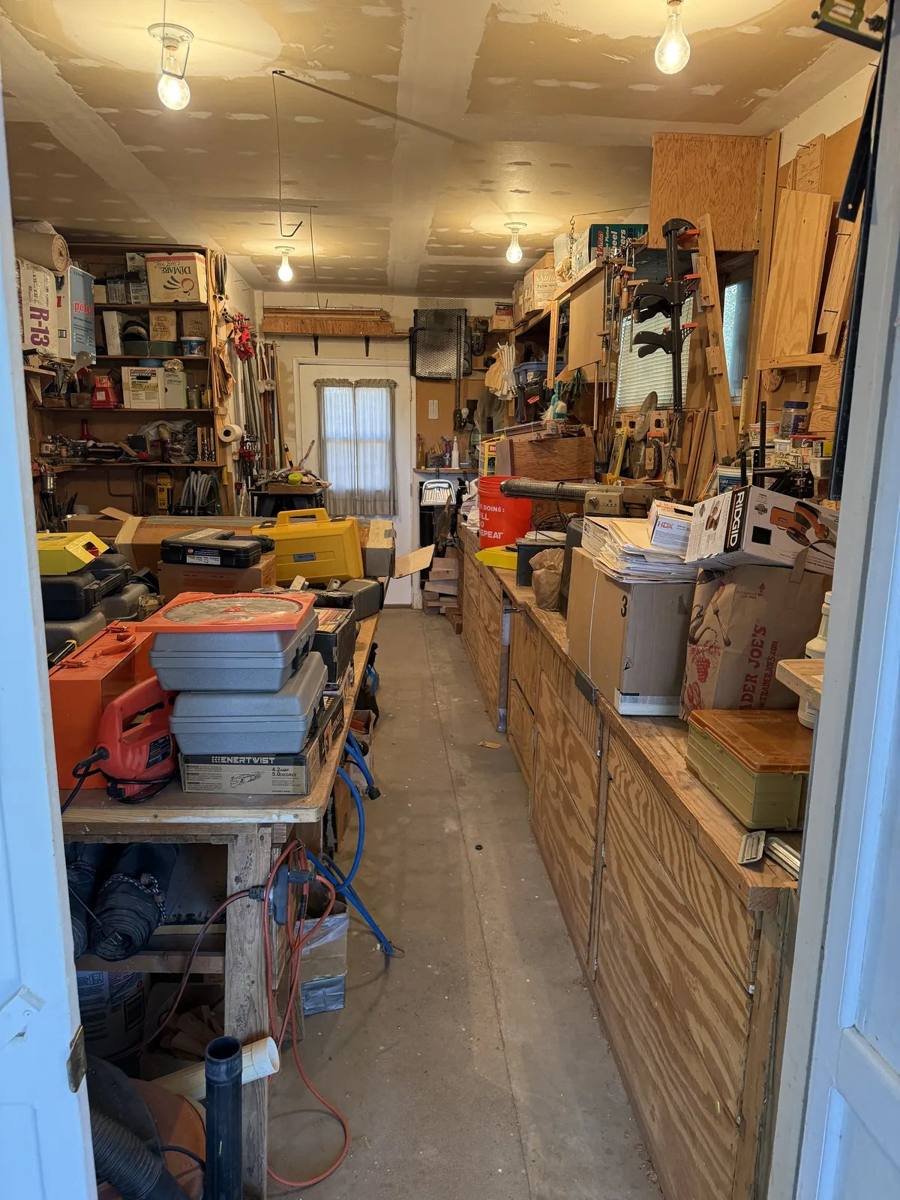
When an estate sale ends, the easy money has already walked out the door. The furniture people lined up for is gone, the jewelry case is empty, and the early birds have picked over the garage. What is left is the stuff nobody fought over: a shelf of odd kitchen tools, a box of cords, a closet of clothes, a drawer of things you cannot name yet.
A lot of people bag it all up and donate it. I would rather sort it first.
I own Taylor Family Store, an estate company in Kingman, Arizona, and I have been selling on eBay since 2020. Most of what I list comes out of those last rooms after a sale closes. Here is the process I use to decide what gets listed, what gets bundled, and what goes out the door, plus a few real examples from our sales.
Why the Leftovers Deserve a Second Look
Estate leftovers are the opposite of a pallet of identical returns. They are one-off items, decades of somebody's hobbies, tools and household goods, and that variety is exactly what a lot of eBay stores are built on. Buyers on eBay are not shopping a single room. They are searching for one specific part, one replacement piece, one tool that matches the one they already own.
The catch is that variety takes time. Every item is its own research project. So the goal is not to list everything. The goal is to spend your listing time on the items that will actually pay you for it.
Step One: Sort Before You List
Before I photograph anything, I make three piles.
Pile one: single listings. Anything with a brand, a tag, a label or a model number you can photograph goes here. Those identifiers are what buyers type into the search bar, and they are what let you find real sold comps.
Pile two: lots. Some things sell better together than apart: a set of matching dishes, a bundle of similar hand tools, a box of craft supplies, a stack of linens. One listing, one set of photos, one box to pack.
Pile three: donate. Generic items with no brand, no identifier and no obvious buyer go to donation, and that is fine. Not everything is worth your time, and an honest donate pile keeps the other two piles moving.
The sort takes discipline, especially at the end of a long sale. But it is the single biggest time saver in the whole process, because it stops you from spending twenty minutes listing something that was never going to sell.
What Makes a Leftover Worth Listing on Its Own
My test is simple: can I photograph something that tells a buyer exactly what this is?
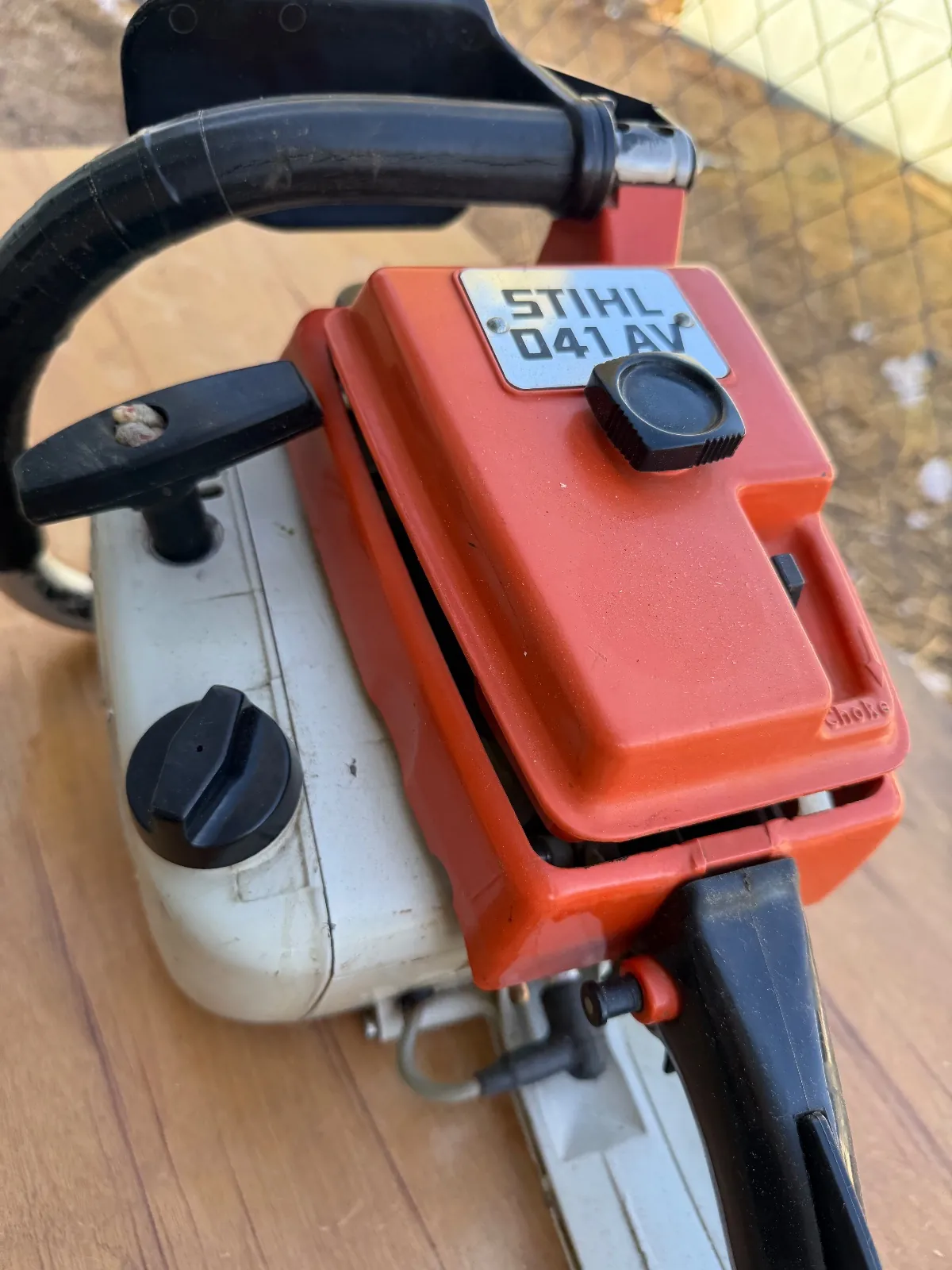
Take this Stihl chainsaw. "Old chainsaw" is a donate-pile description. "Stihl 041 AV" is a search term, and it is printed right on the housing. That one detail moves it from the donate pile to pile one, because now I can look up what that exact model has actually sold for and write a title a buyer will find.
The same goes for anything with a maker's mark on the bottom, a tag sewn into a seam, or a model and serial plate on the back. If it has an identifier, it gets a closer look. If it has none, it needs a really good reason to stay out of the donate pile.
Photos That Do the Work
For pile one, photograph the identifier up close, not just the front of the item. Shoot the model plate, the tag, the maker's mark, the patent number. That one picture answers the first question every buyer has, and it is also the picture that lets you, or any listing tool you use, figure out exactly what you have.
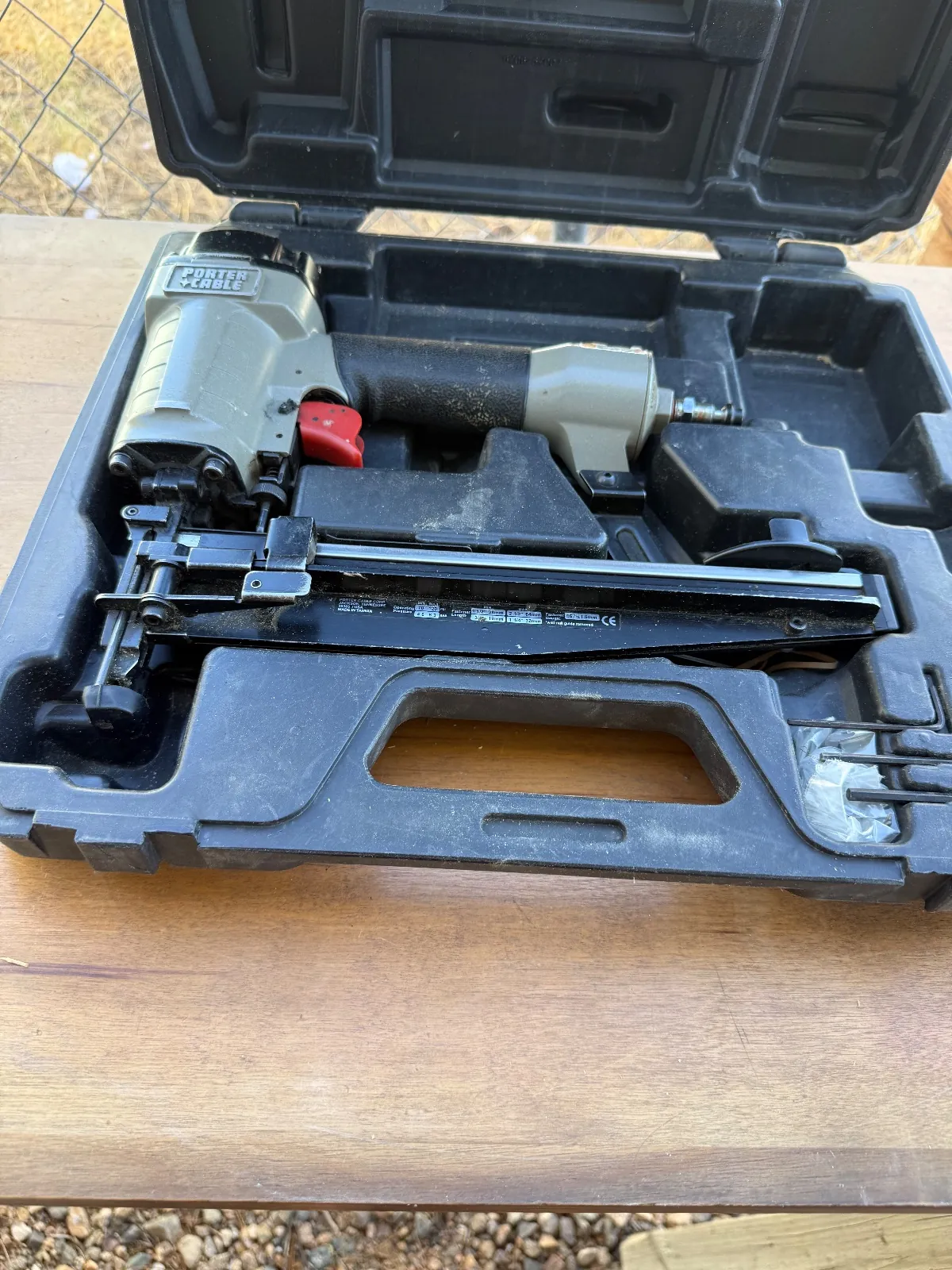
Then shoot what is included. This nailer came in its original fitted case, and that matters. A complete kit and a bare tool are different items to a buyer, they sell differently, and they ship differently. If the case, the manual, the attachments or the original box are there, show them. If something is missing, show that too and say so in the description.
My basic shot list for a single listing:
- The front, in good light, with nothing else in the frame
- The identifier: model plate, tag, label or maker's mark, close enough to read
- What is included: case, accessories, cords, manuals
- Any wear or damage, shot honestly
- The back and bottom
Lots: When Bundling Beats Listing One by One
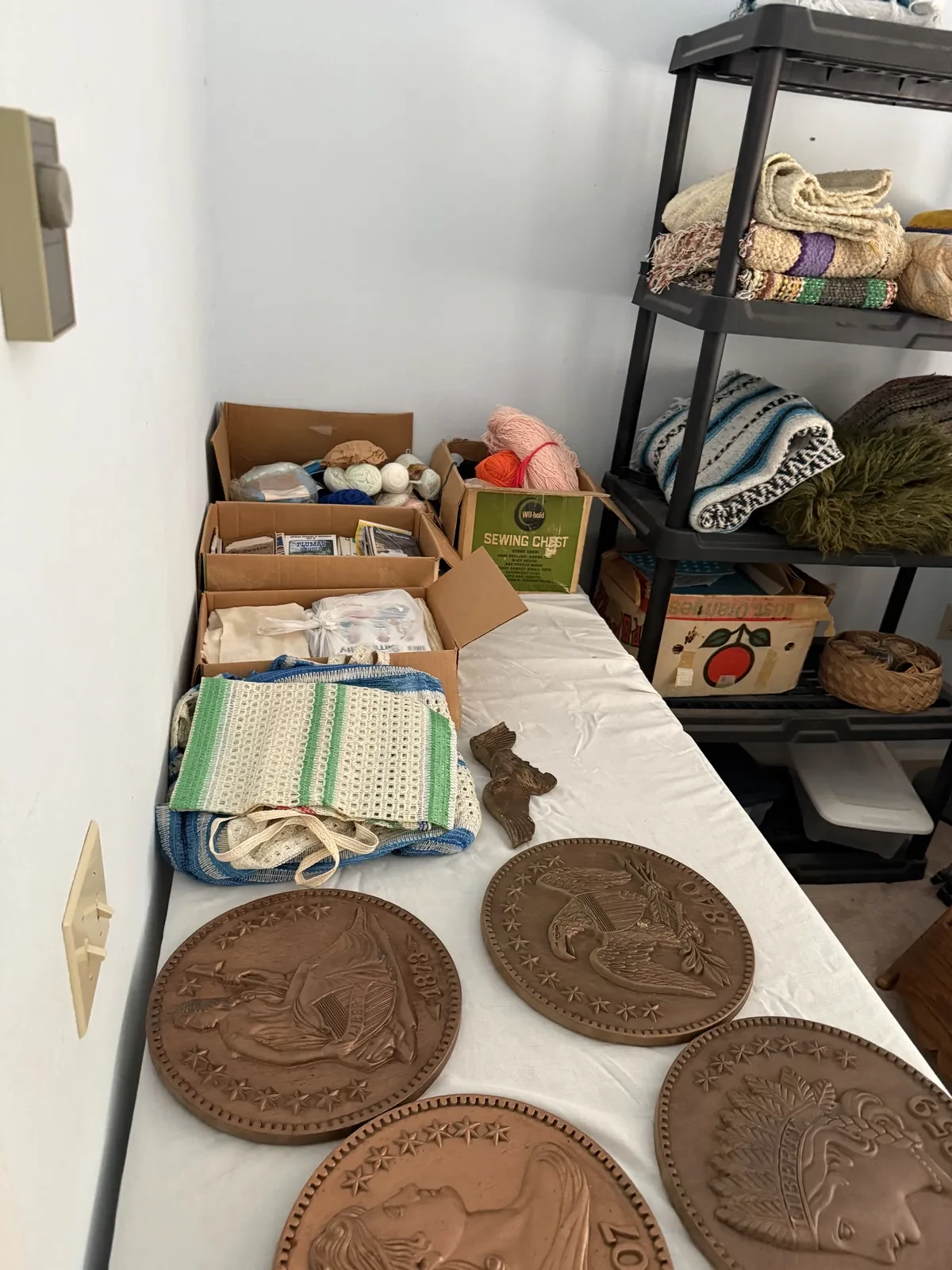
Look at a table like this one: handmade linens, baskets, small decor, boxes of odds and ends. Very little of it has a brand you could search on its own. Listed one at a time, most of these pieces would cost more in time than they would bring.
Grouped into themed lots, they make sense. A box of vintage linens. A lot of baskets. A bundle of craft supplies. Lots work best when the buyer can picture exactly who they are for, so group by theme, not just by "stuff that was on the same table." Photograph the whole lot together first, then a few close-ups of the best pieces, and list the count in the title if you can.
Pricing: Sold Prices, Not Asking Prices
This is where a lot of new resellers get burned. When you search an item on eBay, the default results are active listings, and active listings show asking prices. An asking price is what a seller hopes to get. It tells you nothing about what a buyer actually paid.
Always turn on the Sold filter before you price. Those are completed sales, and that is the only number worth anchoring to. Compare like with like: same model, similar condition, same accessories included. A complete kit in its case is not a comp for a bare tool, and "tested, working" is not a comp for "untested, as is."
If the sold comps for an item are thin, or the realistic sold price minus fees and shipping is too small to justify photographing, measuring and packing it, that item goes back to pile two or pile three. Set your own floor and stick to it.
Know What Should Stay Local
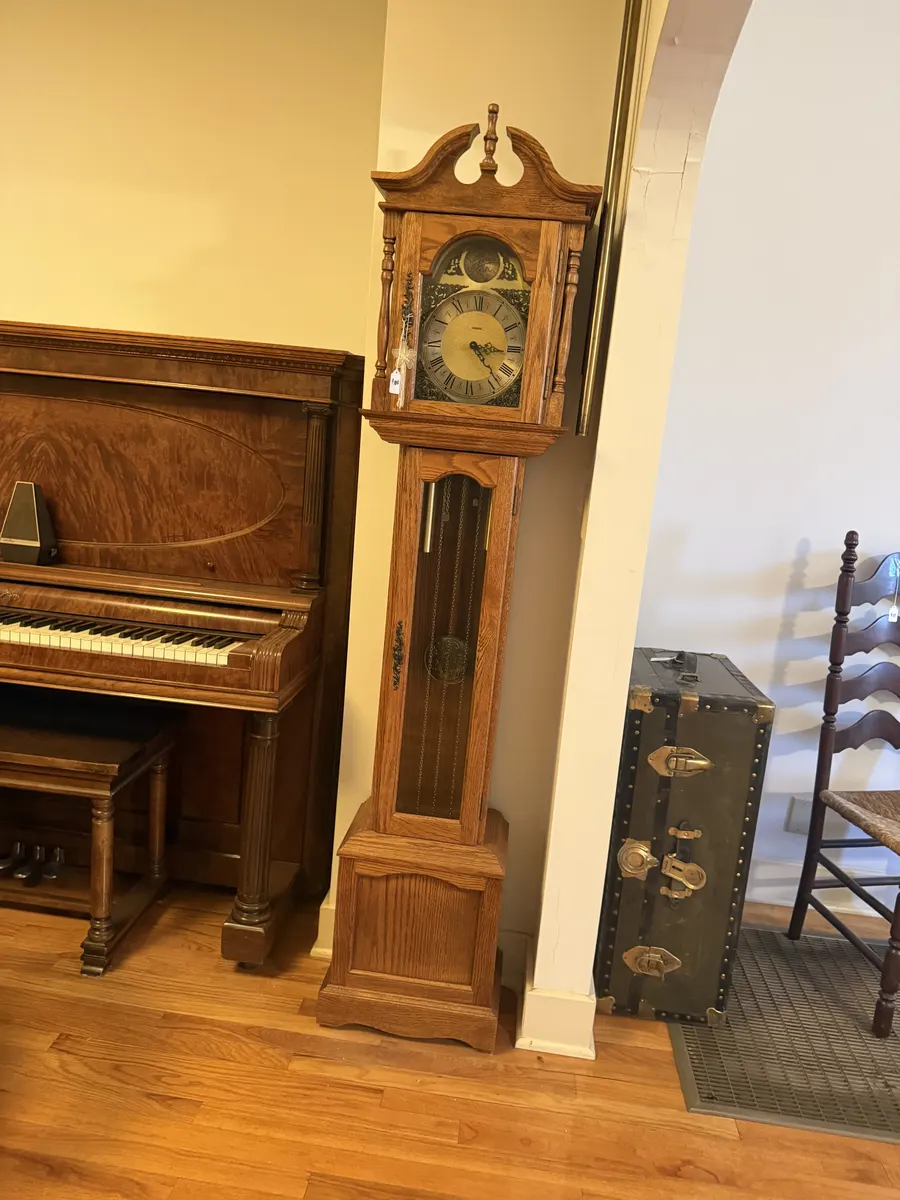
Some leftovers are worth real money and still do not make sense as standard shipped eBay listings. A piano or a grandfather clock is a freight problem, not a parcel. Big, heavy and fragile pieces are often better sold at the sale itself, offered to a local buyer, or listed for local pickup if you are prepared to coordinate it. Knowing that up front saves you from building a listing you will regret the moment someone asks about shipping.
Titles and Item Specifics
Now the part I have always dreaded: titles and item specifics. Write the title the way a buyer searches: brand, model, what it is, key details. "Stihl 041 AV Chainsaw" beats "Vintage Heavy Duty Saw Great Condition" every time. Then fill in every item specific you can, because buyers filter by them.
I have the superpower of ADHD, and tedious, repetitive work like item specifics is the hardest thing in the world for me. That is a big reason I built FlowLister, an AI listing tool that turns my item photos into eBay listings, so I am not typing every field by hand at the end of a long sale. Whatever tool you use, or if you write every listing yourself, read every listing before it goes live. AI is going to miss things, and you are the one who has the item in your hands.
Beyond eBay
Once an item is photographed and written up, that work does not have to live on one marketplace. Clothing, shoes and accessories from the closet can go to Poshmark and Depop, and a lot of household and hobby items do well on Mercari. Listing the same item in more places means more buyers see it, and you only did the photos and the research once. Just remember to end the other listings as soon as it sells.
The Short Version
- Sort first: singles, lots, donate.
- Singles need an identifier you can photograph.
- Shoot the identifier and everything that is included.
- Bundle the unbranded small stuff into themed lots.
- Price from sold listings, never asking prices.
- Keep the big, heavy pieces local unless you can arrange specialized shipping.
- Write titles the way buyers search, and read every listing before it goes live.
The leftovers are where a lot of my inventory comes from. They are not glamorous, but with a quick sort and an honest donate pile, the end of the sale can be the start of a lot of good listings.

Chris Taylor
Chris Taylor owns Taylor Family Store, an estate company in Kingman, Arizona, and has been selling on eBay since 2020. He is the founder of FlowLister, AI eBay listing software that turns item photos into eBay listings.
Meet Chris and his work ↗Have you tried this approach?
Do you handle estate-sale leftovers differently? Have a question for Chris, or feedback on FlowLister? I want to hear the good, the bad, and the practical. Your experience helps us recommend better tools and publish more useful guides.
Send us your feedback